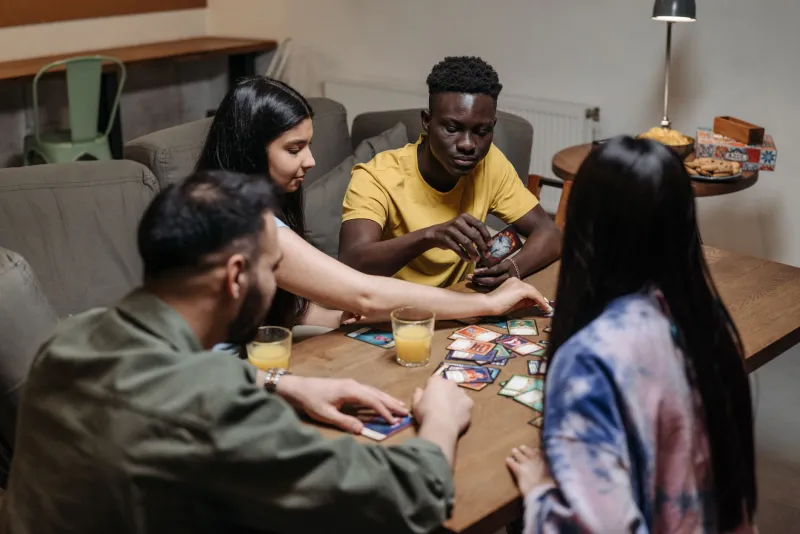
The Calendar-Link Friend: How to Turn One Good Hangout Into a Recurring Crew

Here is a social truth that does not get enough airtime: the funniest, warmest, most interesting people in your life are not always the ones who text first. Sometimes they are the ones who had a great time at a casual hangout and then did nothing about it. Not because they are rude. Because following up is weirdly hard. You do not want to seem desperate. You do not want to be annoying. You do not want to be the person who keeps adding people to a group chat nobody asked for.
I get it. But in 2026, we are extremely good at finding people and strangely bad at returning to them. We can trade handles in three seconds and then let the connection dissolve into a contact entry with no last name. The follow-up friend is the person who closes that gap. Not with pressure, not with a five-paragraph emotional essay, but with a calendar link and a reasonable ask.
The Follow-Up Friend Is Not the Loudest Person in the Room
There is a stereotype that the friend who organizes everything is a super-extrovert with a color-coded spreadsheet. Sometimes, sure. But the follow-up friend is often just the person who noticed that everyone had fun and decided to do one small thing about it. They send the recap. They make the group chat. They suggest the next date. They are not trying to become the mayor of your social life. They are trying to keep a good thing from evaporating.
This is an underrated skill because most friendships do not die from conflict. They fade from lack of a second touchpoint. One great night becomes a story you tell later: 'We met at that Friendsgiving and we kept saying we should get together.' Cool. But 'should' is not a plan. A plan has a day, a place, and at least one person willing to send the link.
Why One Good Hangout Usually Dies
A casual meetup gives you a tiny hit of social momentum. You laughed. You exchanged numbers. You found out someone else loves the same terrible reality show. Then everyone goes home, returns to their inbox, and waits for someone else to be the initiator. This is not laziness. It is social diffusion. When a group of people all vaguely intend to follow up, nobody feels personally responsible for making it happen.
The follow-up friend removes that fog. They make one clear move. They do not say, 'We should hang out sometime.' They say, 'I am going to that coffee place on Sunday. Want to join?' Specificity is the whole game.
The 48-Hour Window Is a Myth, But Momentum Is Real
You do not have to text the same night. You do not have to become a human CRM. But the longer you wait, the more the hangout turns from a bridge into a memory. A good window is somewhere between the next day and the next week. That is long enough to seem normal, short enough that the details are still fresh.
My rule is simple: one follow-up, one specific plan, one easy out. That is it. You are not proposing a annual tradition. You are offering a low-stakes next step.
Three Scripts You Can Copy Without Feeling Like a Robot
The Specific Callback
'Hey, still thinking about that story you told about the dog and the roomba. I am going to try that new taco place on Thursday. Want to join? No pressure if not.'
This works because it proves you were listening and gives the other person a concrete yes-or-no option. It is not a vague invitation into the void.
The Group-Chat Invite
'Had fun last night. A few of us talked about doing a monthly trivia night. I am starting a tiny group chat for it. Want in? Totally fine if it is not your thing.'
Notice the permission slip at the end. It gives the person a graceful exit and makes the invite feel less like a trap.
The Low-Stakes Check-In
'Random: you mentioned you were looking for a good bakery. I saw this place and thought of you. Also, are you free for a walk in the next couple weeks?'
This one works because it leads with a small gift, not a demand. A link, a recommendation, a meme. Then it follows with a real invitation. Keep it light. Do not send a paragraph when a sentence will do.
Reminder Rituals for People With Full Inboxes
Following up is easier when you stop relying on memory. Set a 10-minute friend admin block on Sunday nights. Scan your camera roll for photos from the hangout. Check your notes for names and context. Send one follow-up. That is the whole ritual. It does not need to be a productivity system. It just needs to be repeatable.
Save context in your contacts. 'Met at Friendsgiving, loves baking, wants museum recs' is not weird. It is helpful. After you meet someone new, put a two-week nudge in your calendar: 'Text Sam about the hiking trail.' If that feels too corporate, call it your friendship inbox and give it a funny name. The point is to create a small external memory so the connection does not depend on you being in the perfect mood.
The Add-Me Challenge: Make Follow-Up a Game
AddMe.fun has a playful spirit for a reason. Social stuff gets easier when it feels like a game instead of a test. Try the Add One, Plan One challenge: after every good hangout, add one person to a group chat and plan one two-hour thing. That is it. No elaborate dinner party. Just a walk, a coffee, a trivia night, a museum afternoon.
Or try the Three-Message Challenge. After a hangout, send three messages total: a recap, a link, and an invite. The recap makes the other person feel remembered. The link gives them something to respond to. The invite gives them a way back in. It is a tiny social ritual that takes less time than choosing a streaming show.
Another option: start a monthly prompt chat. Everyone gets one question, one photo, or one recommendation. It gives the group a reason to exist beyond scheduling. The group chat does not need to be a nonstop performance. It just needs a pulse.
Boundaries: Recurring Friendship Should Not Feel Like a Campaign
Here is where follow-up becomes too much. Do not add people to group chats without asking. Do not make someone the project. Do not keep score. Do not send a second follow-up if the first one gets a polite non-answer. A good rule is: one invite, then wait. If the person is interested, they will meet you halfway. If they are not, you have lost nothing except a little time and maybe a tiny bit of pride.
Use opt-out language. Say 'no pressure' and mean it. Match energy. If someone responds with a short answer and no alternative plan, let it rest. Recurring friendship should feel easy, not like a campaign with a marketing funnel. You are not trying to close a deal. You are trying to build a small, comfortable rhythm.
The Payoff Is a Calendar That Actually Looks Like You
The follow-up friend is not the loudest person in the room. They are the one who sends the calendar link. They are the one who turns one good hangout into a trivia team, a Sunday walk crew, a monthly potluck, or a group chat that actually makes people laugh. That is not pushy. That is generous.
So the next time you leave a genuinely fun hangout, do not just say, 'We should do this again.' Be the person who makes 'again' have a date. Your future group chat will thank you.