The Add-First Friendship Era: Why Breaking the Ice Online Is the New Small Talk
The adult friendship problem is not that Americans hate people. It is that we have made the first hello carry too much weight. A quiz, a prompt, a playful profile, and a tiny online community will not fix a culture of overstuffed calendars and underused third places. But in 2026, they are doing something useful: lowering the cost of the first hello enough that a second one becomes possible.
The Awkwardness Is Structural, Not Personal
Making friends as an adult in the US often requires repeated, unplanned proximity. School gave us that. Shared offices gave some of us that. Then remote work, moves, and the slow disappearance of cheap places to linger made adult friendship feel like a scheduling negotiation. We treat awkwardness as a personal failing when it is often just a missing container. If there is no low-stakes room to run into the same people again, every interaction starts to feel like an audition.
Why Online-First Icebreakers Work
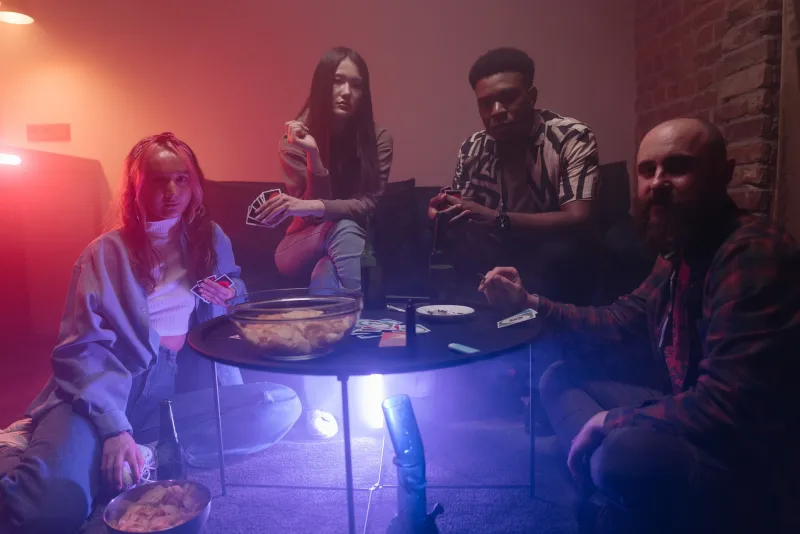
Prompt-based profiles give us something to react to. Quizzes give us permission to be a little silly before we are profound. Small communities give us a side door into a group without walking into a crowded room alone. AddMe.fun-style prompts are not trying to replace the house party. They are trying to make the house party less terrifying for the person who has been standing by the chips for twenty minutes.
There is a practical reason this works. A prompt answers the question we are all secretly asking: what do I say next? What is your current low-stakes obsession? is easier to answer than Tell me about yourself. Are you a group-chat glue person or a lurker? gives two people a playful way to compare social rhythms without turning it into a personality audit.
The Etiquette of Adding Someone in 2026
Adding someone is not a claim on their calendar. It is a small social gesture, and it should be treated like one. Mention where you met. Give a reason you are reaching out. Keep the first message short. Do not send a 500-word essay to someone you met for nine minutes at a coworking lunch.
A few ground rules that should be obvious but are not:
- Ask before adding someone to a group chat. The group chat is a shared room, not a trophy case.
- Do not screenshot a private prompt answer and post it for laughs. Playful does not mean public.
- Match the energy. If someone gives you a short reply, do not chase them with a paragraph.
- One follow-up is friendly. Three is a subscription they did not sign up for.
- Respect slow replies. Adults are tired, and a delayed text is not a rejection of your entire existence.
The best add is specific. Hey, I am the person who said I would judge the playlist. Want to grab coffee after the next coworking lunch? That is a doorway. Let's hang out sometime is a fog machine.
The Awkward Middle Is the Point
Online-first friendship has a bad reputation because it can become online-only friendship. That is a real risk. A group chat can feel like a warm room, but it is not a substitute for showing up. The case for making friends online first is not that the internet is better than real life. It is that the internet can be a decent bridge to real life when the bridge is short.
So make the bridge short. Move from a public prompt to a private message. Move from a private message to a small plan. Move from a small plan to a second one. The transition does not need to be dramatic. A trivia night, a hobby club meeting, a walk around the park, or a lunch at the coworking space is enough. The goal is not to skip the awkward middle. The goal is to make the awkward middle survivable.
What Playful Prompts Can and Cannot Fix
Playful prompts can lower the stakes. They can give a quiet person a script and a loud person a pause button. They can turn a profile into a conversation starter instead of a performance. They cannot maintain a friendship for you. They cannot remember a birthday, show up when someone has a bad week, or sit with the silence after a hard joke. Those things still require presence.
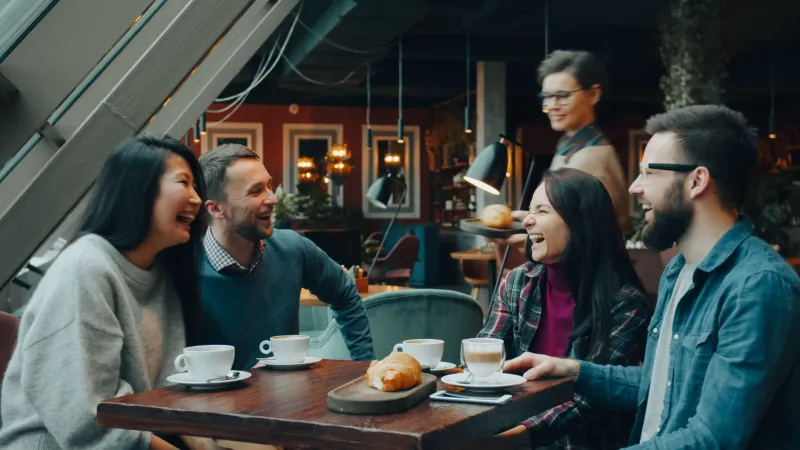
That is why the AddMe.fun approach should be read as an on-ramp, not a destination. Quizzes and prompts are the icebreaker. The friendship is the repeated contact that comes after. If the prompt gets you to the coffee, it has done its job. If the coffee gets you to the second coffee, even better. If the second coffee gets you to a group chat that actually makes plans, you have built something real.
The Case for Add-First, Meet-Soon
In 2026, the most useful social skill might be knowing how to be lightly brave online. Send the prompt. Ask the question. Make the small invitation. Then get offline and be a person in a room. The internet is not a replacement for the third place. It is a set of training wheels for it. And training wheels are not embarrassing. They are how more of us get back on the bike.